











NEW YORK
Kazuko Miyamoto
Works Related to Miyamoto’s Time
at The Art Students League
1964 – 1968
May 21st – July 7th, 2026
At Zürcher Gallery, New York
View the press release here.
Featured on artforum.com’s “Must-See Shows” list for New York.
Kazuko MIYAMOTO was born in 1942 in Tokyo, where she studied at the Gendai Bijutsu Kenkyujo. She moved to New York City in 1964 and enrolled at the Art Students League.
From 1964–1968, Miyamoto spent every day at the Art Students League, attending morning and afternoon courses and assisting with cleanup to reduce the modest tuition. Proximate to MoMA, with a wide variety of classes to choose from and an even wider range of students, the school provided an entry point to the New York art world and a space for artistic experimentation, an experience Miyamoto shared with broader network of immigrant artists who attended the Art Students League during the twentieth century. Scholars have highlighted the primacy of the school as a landing place for Asian artists in particular, noting its accessible tuition, liberal course structure, and the absence of enrollment requirements or language tests.2 By the 1960s, it had an established history of Japanese artists as students and instructors throughout its first century, with Yasuo Kuniyoshi heralded among celebrated alumni. 3
Miyamoto first enrolled in textile design but was quickly swept up in the League’s rich painting scene, repeatedly taking courses with Charles Alston, Sidney Gross, and Theodoros Stamos for her remaining years. Early works evidence the influence of the distinct painting instructors and the artist’s corresponding stylistic experimentation: from loose gestural compositions to layered geometric swaths of color. In 1966, a painting Miyamoto created in Alston’s class was awarded a class selection in the student concours exhibition, one of her first opportunities to exhibit work. Decades later, she noted Alston as her most influential instructor, recalling he would, at times, pick up her paintbrush to demonstrate directly on the surface of her work. In 1968, Miyamoto ceased her enrollment and left 57th Street for the Lower East Side, where she joined a growing community of immigrant artists, many of whom had likewise passed through the Art Students League. Outside the classroom, she began working directly on the well, creating ephemeral sculptures and environmental installations and coproducing artist-curated exhibitions as an early member of A.I.R. Gallery and the Rivington School. In 1986, she opened Gallery Onetwentyeight, an exhibition space that became known as a resource for international artists moving to New York. In the decades since, the gallery has shirked curatorial conventions to provide an experimental, accessible, and collaborative space, all qualities that one could argue Miyamoto encountered at the Art Students League. Long after her time as a student, Miyamoto continued to engage with the League as a place to connect with young Japanese artists in New York, many of whom she subsequently exhibited at Gallery Onetwentyeight.4
- Elise Armani, 150 Stories: Lives of the Artists at the League, 2025
Kazuko Miyamoto emigrated to New York City from Japan to look for freedom as a woman artist. In an interview with Hans Ulrich Obrist and Emma Enderby at Gallery Onetwentyeight (January 2020), Kazuko says that “New York was everything. If you wanted tradition, maybe you’d go to Kyoto. But if you wanted to see the future, New York, New York, New York! That’s what I thought.” Kazuko’s first encounter with art was at an exhibition of traditional painting and calligraphy in her father’s gallery. Kazuko’s art is deeply rooted in her place of birth, bearing a distinctly Japanese imprint, including her studies in calligraphy.
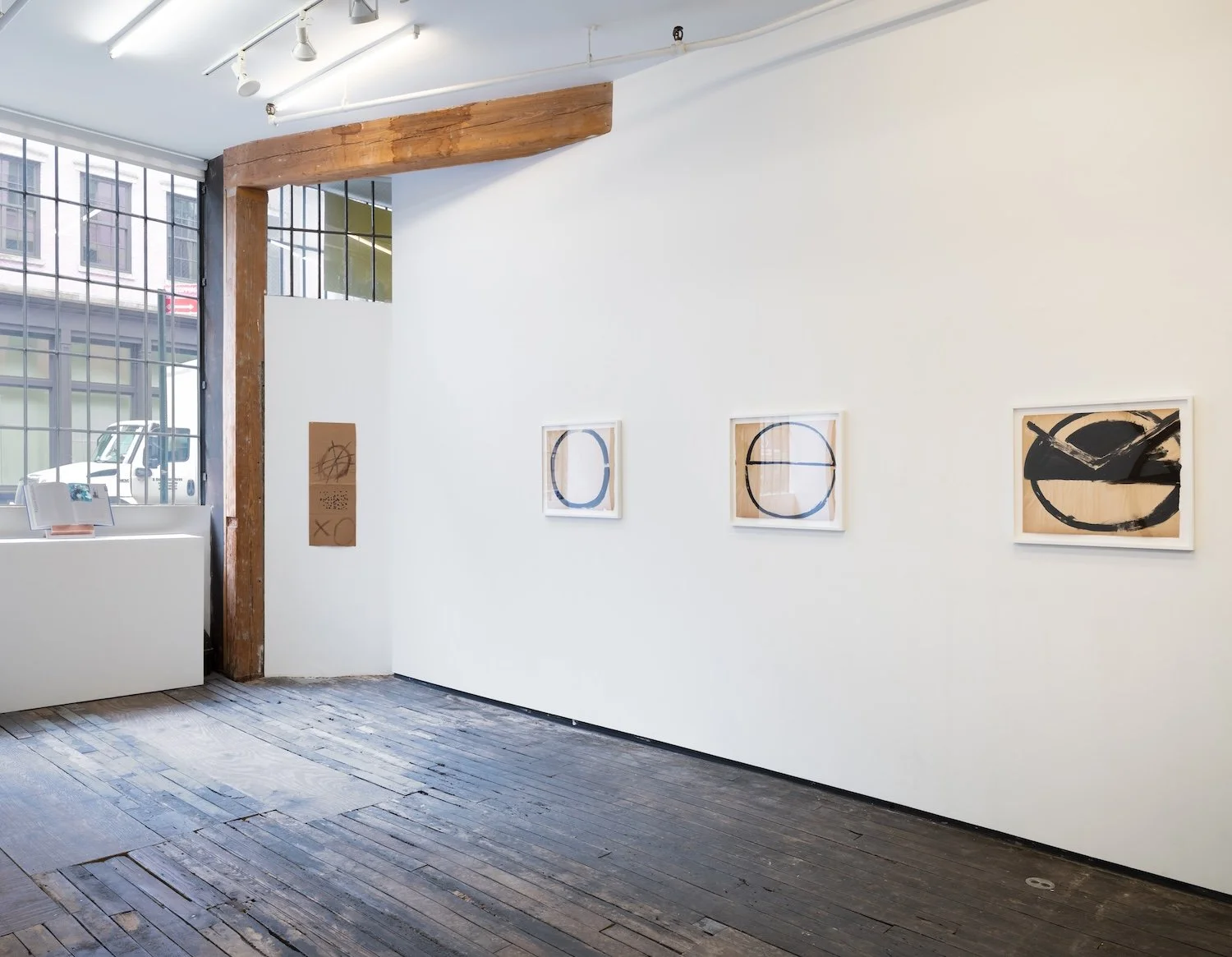
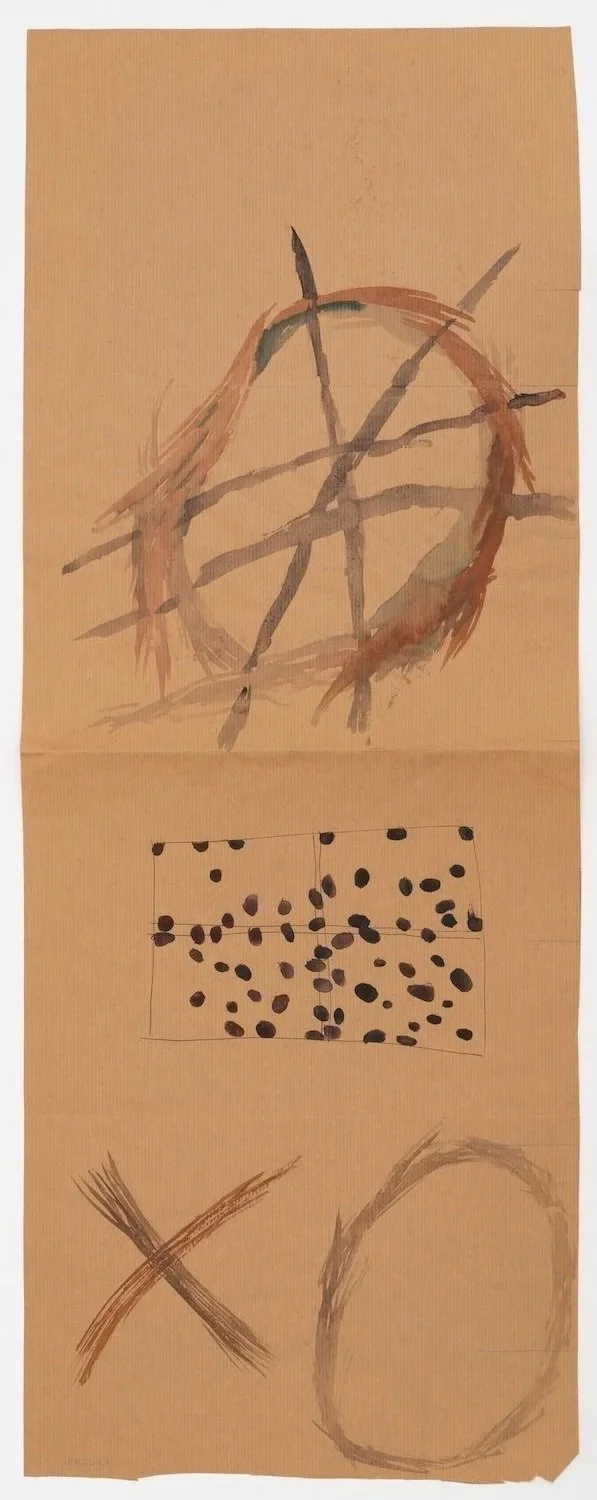
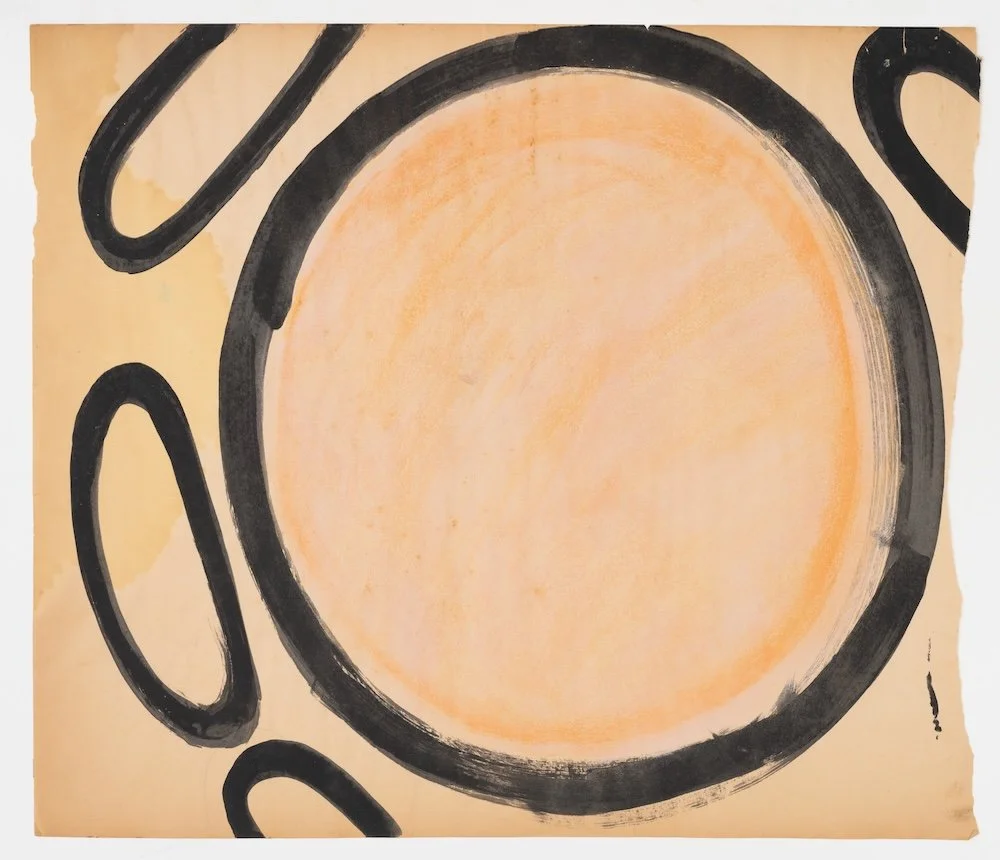
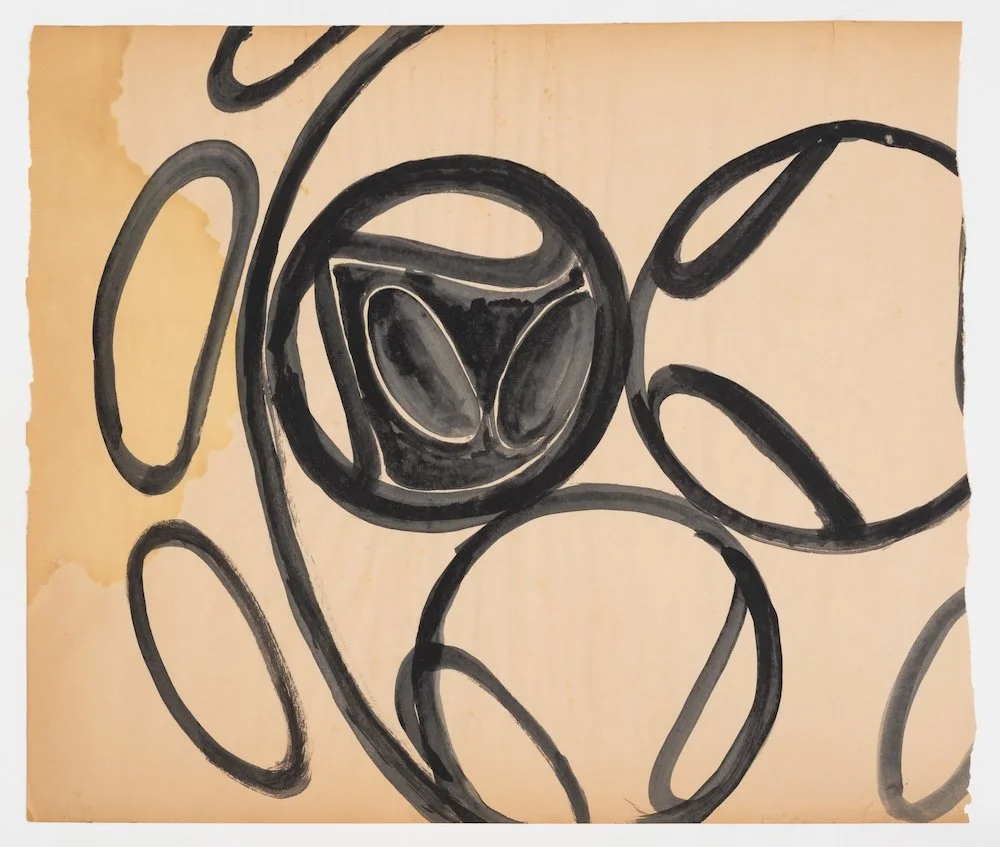
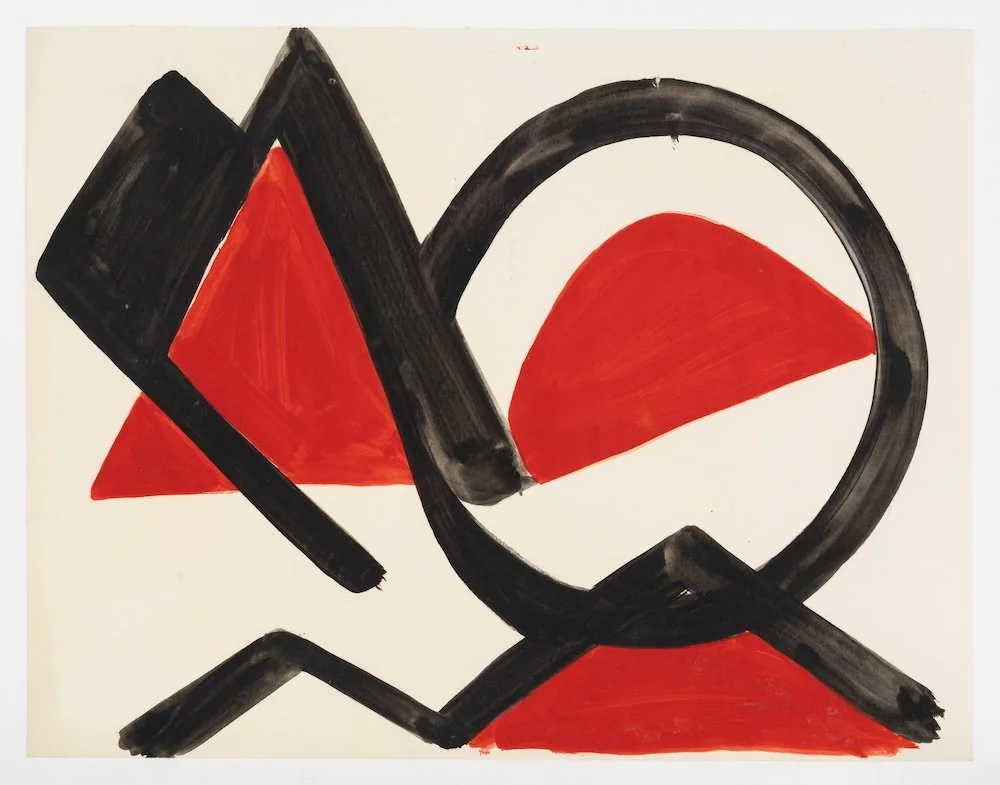
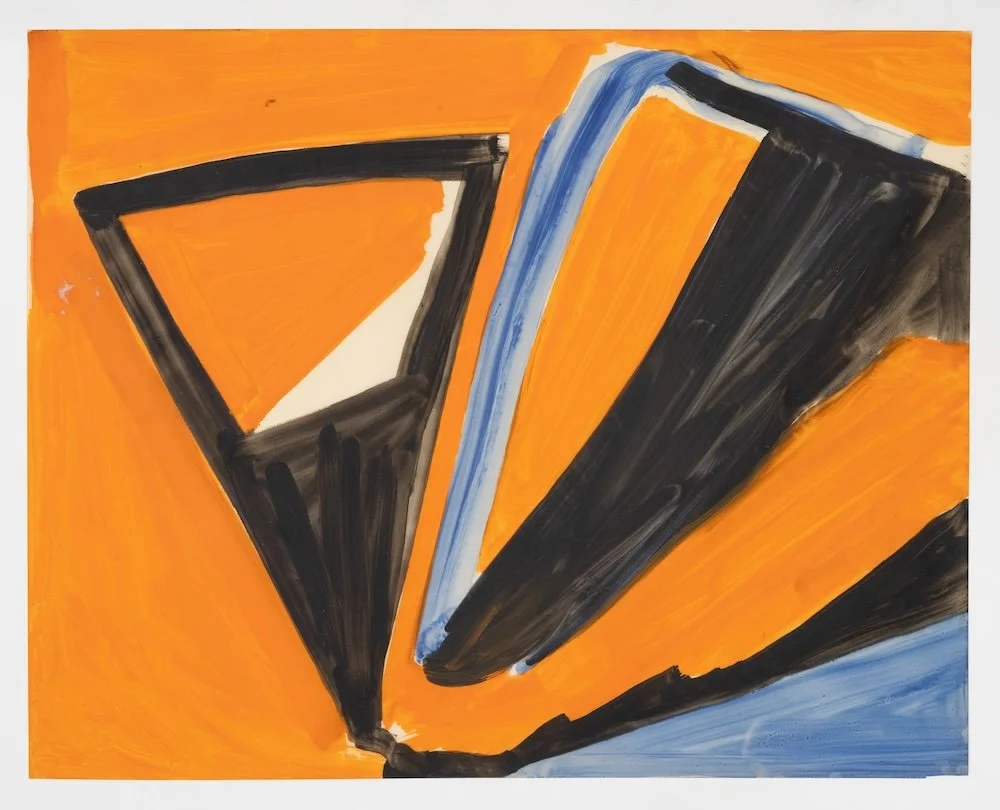
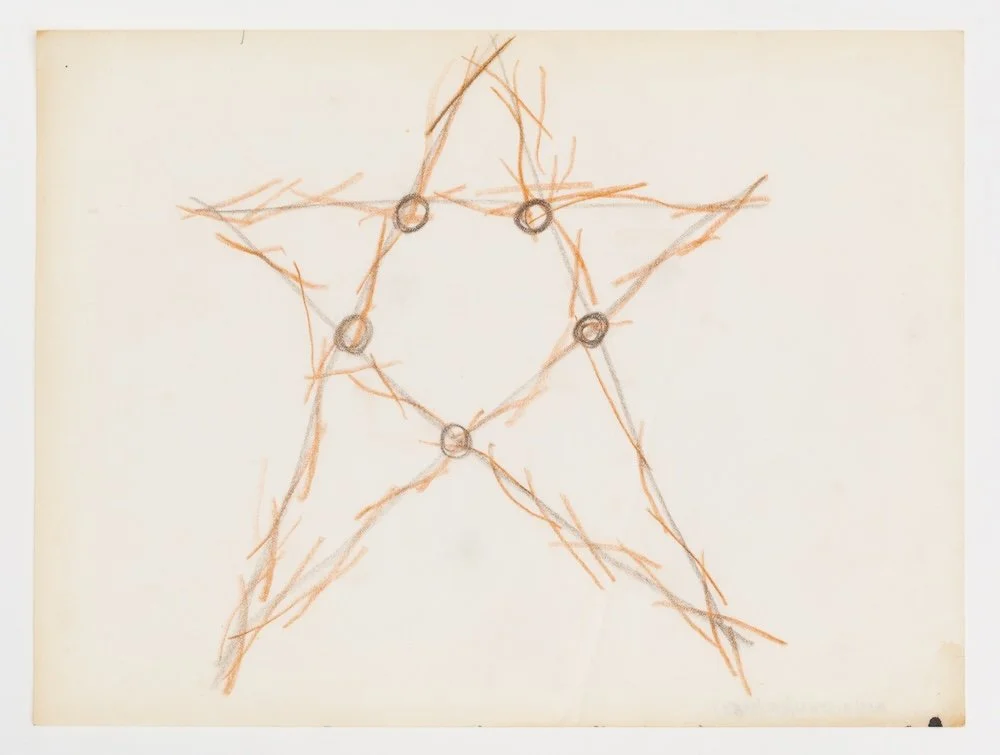
We are thrilled to present this group of paintings on paper from 1964–1968 for the very first time. They are characterized by strong lines and brushstrokes related to calligraphic art. They are self-assured and manifest a great self-control for a young artist like Kazuko who was only in her mid-late twenties when she made them. They also attest to a great sense of freedom. In the same interview with Hans Ulrich Obrist and Emma Enderby, she says: “I want to bring back calligraphy, let people try it, with big brushes, on fabric or paper. Westerners should feel how the body moves with it.” The patterns she had been practicing in her paintings between 1964–1968 slowly wandered into the sculptural forms made of discarded cardboard and scavenged twigs - also shown here for the first time - as a way to connect her Japanese roots to the American culture she was beginning to adopt. At the end of her time at The Art Students League, Kazuko moved away from painting and slowly emancipated her practice from the parameters of space. She met Sol LeWitt in 1970 and started creating her series of String Constructions. The sense of composition in these rare paintings on paper from 1964–1968 announce Miyamoto’s occupation of space in her later sculpture.
Footnotes for Kazuko Miyamoto’s section, including Elise Armani’s text, in 150 Stories: Lives of the Artists at the League, published in 2025:
1. Kazuko Miyamoto in conversation with the author, November 22, 2019.
2. See Midori Yoshimoto, Into Performance: Japanese Women Artists in New York (New Brunswick, N): Rutgers University Press, 2005); Anthony Yung, "Chinese Artists in New York, 1980s" in Taiping Tianguo-A History of Possible Encounters, ed. Doryun Chong and Cosmin Constinaş (Cambridge, MA: MIT Press, 2015); and Ramona Handel-Bajema, Art Across Borders: Japanese Artists in the United States Before World War II (Honolulu: University of Hawai'i Press, 2022).
3. 3. In 1966, when MoMA presented the first major American exhibition of postwar Japanese art, The New Japanese Painting and Sculpture, four of the artists included were current or former students at the Art Students League (Takeshi Kawashima, Reiji Kimura, Tadasky [Tadasuke Kuwayama], and Sei Yamamoto). Additional prominent Japanese artists who attended or taught at the Art Students League over its first 100 years include Yasuo Kuniyoshi, Yayoi Kusama, Tadaaki Kuwayama, Kagawa Tamiji, Shimizu Toshi, Kikuo Saito, and Takako Saito. Kikuo Saito, Takako Saito, and Takeshi Kawashima were enrolled contemporaneously with Miyamoto.
4. 4. Artist Toki Ozaki, a close friend of Miyamoto's, initially met the artist after encountering flyers she had posted at the Art Students League, written in Japanese and advertising an open room in her loft. A 2013 exhibition, 57th Street Now and Then, presented Miyamoto's own student work from the 1960s alongside the contemporary work of then-student Fumiko Kashiwagi.